Chapter 19 - The Courtroom Restoration
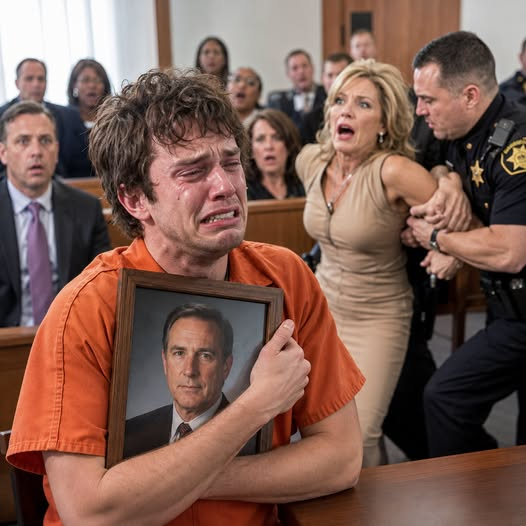
The courthouse restoration required months of careful work.
The wooden gallery benches were removed, repaired, and returned.
Damaged plaster was replaced.
Historic brass fixtures were cleaned by hand.
Daniel personally supervised the defense table.
A deep scratch crossed its edge.
He remembered making it with his handcuff chain during the original trial.
The architect suggested refinishing the entire surface.
Daniel refused.
“Stabilize it. Do not erase it.”
A small section of the scratch remained visible beneath protective sealant.
Not as a memorial to Daniel alone.
As a reminder that public institutions could be restored without pretending they had never failed.
The court approved a plaque inside the hallway.
It did not name Vanessa or Damien.
It read:
JUSTICE REQUIRES EVIDENCE, COURAGE, AND THE WILLINGNESS TO CORRECT ERROR.
Former jurors from Daniel’s first trial visited during the reopening.
One woman approached him in tears.
“I voted guilty.”
Daniel did not know what she expected.
Forgiveness.
Anger.
Reassurance.
He answered honestly.
“You decided based on evidence people manufactured.”
“I should have seen it.”
“So should many professionals.”
She looked toward the scratch.
“I’m sorry.”
Daniel nodded.
He was not required to comfort everyone affected by his wrongful conviction.
But he did not want to carry each person as an enemy.
At the reopening ceremony, Samuel Bell sat in the front row.
Rachel stood beside the prosecutor who originally tried Daniel.
The former prosecutor had retired.
He publicly acknowledged that his office failed to test the evidence aggressively enough.
Daniel appreciated the admission.
He did not call it redemption.
Accountability was not a speech.
It was improved practice.
The county created a conviction-integrity unit afterward.
Rachel became its first director.
Robert House partnered with the unit to support people released during reinvestigations.
One evening after work, Daniel entered the empty courtroom.
He sat at the defense table wearing ordinary clothes.
No restraints.
No guards.
He placed the old iron key beside the preserved scratch.
Five years earlier, he believed power belonged entirely to the people deciding his fate.
Now he understood something different.
Institutions had power.
Families had power.
Money had power.
But truth could survive inside letters, ledgers, medical samples, old videos, and the memories of people brave enough not to destroy them.
May you like


Daniel picked up the key and left the courtroom through the public doors.
👉 His name was clear and his father’s company restored, but complete peace required one final visit to the place Robert had chosen as his real grave.