Chapter 13 - THE NIGHTS CLAIRE COULD NOT SLEEP
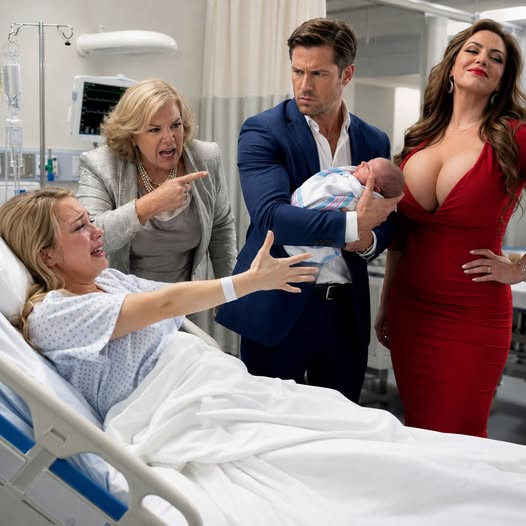
Claire moved into a quiet townhouse owned by her maternal trust.
Not Harrison’s penthouse.
Not the apartment she shared with Adrian.
A home she selected herself.
For the first three months, Lily slept in a bassinet beside Claire’s bed.
Every sound woke her.
A change in breathing.
A car door outside.
Footsteps in the hall.
Sometimes Claire opened her eyes convinced Adrian stood beside the bassinet.
The room would be empty.
She installed locks, alarms, and cameras.
Then she checked them repeatedly.
Harrison suggested private security.
Claire declined permanent guards.
“I don’t want Lily growing up believing danger is always outside the door.”
She worked with a trauma therapist instead.
The therapist never told her to relax.
They practiced separating memory from present reality.
Adrian is in prison.
The door is locked.
Lily is here.
Claire is awake.
Some nights, the statements worked.
Other nights, Claire sat in the rocking chair until sunrise.
Breastfeeding had become difficult after the hospital trauma.
Claire felt guilty.
A lactation consultant reminded her that motherhood was not measured by one feeding method.
Lily grew healthy.
She smiled at music.
Hated peas.
Loved pulling Harrison’s glasses from his face.
Ordinary details slowly replaced the hospital room.
Claire and Harrison attended family therapy.
They discussed the years before Adrian.
Harrison admitted investigating Claire’s relationships without consent.
Claire admitted using total distance to protect her independence.
Neither blamed their conflict for Adrian’s crimes.
They examined how the conflict created an opening he exploited.
“I thought protecting you meant identifying every threat,” Harrison said.
“I thought freedom meant refusing every form of help.”
“What does it mean now?”
Claire looked toward Lily playing on the carpet.
“Help I can accept or refuse.”
Harrison nodded.
He no longer entered Claire’s home without asking.
He did not place her on the Whitmore Global board.
He offered information and waited.
Claire eventually chose to join the family foundation—not the corporation.
She focused on maternal legal safety, medical consent, and identity fraud.
The hospital where Lily was born invited her to review its parentage-dispute protocols.
Claire agreed only if nurses, social workers, and patient advocates led the process.
The new policy required independent verification of surrogacy documents.
No infant could be discharged based on private contracts alone.
Patients under medication could not execute parentage or guardianship transfers.
Disputed records triggered automatic legal review.
Emergency contacts could not be changed by one spouse without confirmation.
The nurse who called Harrison became the program’s first training director.
Claire asked why she had looked twice at the chart.
The nurse answered:
“Because your husband was trying to make the documents more important than the woman in the bed.”
That sentence became part of the training.
Years earlier, Adrian had used systems to isolate Claire.
Claire now helped redesign systems so a frightened patient would not need a famous name to be protected.
Then Naomi received a request from prison.
Adrian wanted Claire to bring Lily for a visit.
He claimed fatherhood gave him the right to see the child he had lost.
Claire read the request carefully.
The letter contained no acknowledgment of taking Lily from her arms.
No acknowledgment of the forged records.
Only loss.
Claire declined.
Adrian appealed.
The court appointed an independent child specialist.
Lily was still too young to understand.
The specialist recommended no contact.
Adrian sent another message.
You’re using my daughter to punish me.
Claire did not answer.
Lily was not a reward to grant or remove.
May you like



She was a person whose safety came first.
👉 Adrian continued calling Lily “my daughter” as though the words created rights—but Claire had learned that parenthood was proved by protection, not possession.