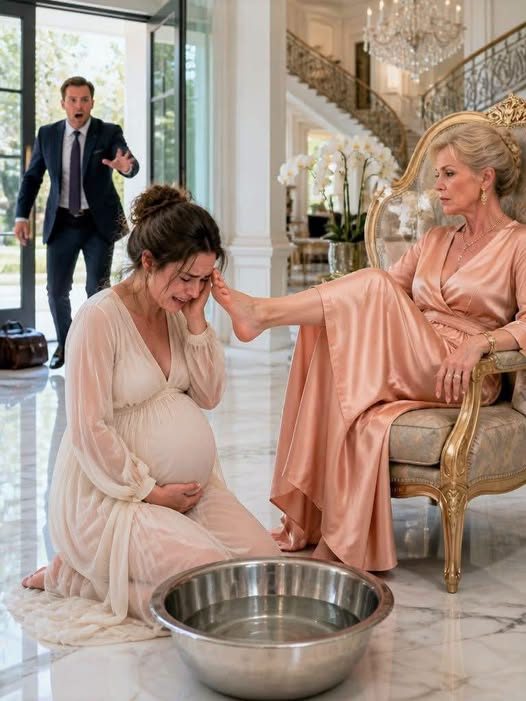
Chapter 3 - THE PRICE OF LOOKING GENEROUS

After the wedding, Vivian moved into the mansion with Theodore.
Margaret remained in the east wing.
She promised the arrangement would be temporary.
It lasted seven years.
At first, the household expenses seemed manageable.
Vivian paid the property insurance through Willow Creek.
Theodore covered groceries and staff wages from his salary.
Margaret received a monthly household allowance.
Then the requests grew.
A cousin needed tuition.
An uncle’s restaurant was failing.
Theodore’s sister wanted a destination wedding.
Margaret said helping them would prove Vivian understood family loyalty.
Vivian agreed to several temporary loans.
None were repaid.
Theodore began telling relatives he was the one supporting them.
Vivian discovered the lie when his cousin thanked him at Thanksgiving for paying her son’s medical bill.
Theodore had not contributed a dollar.
Later that night, Vivian confronted him.
“Why didn’t you tell her the money came from me?”
“She already feels ashamed.”
“Then say it came from both of us.”
Theodore became defensive.
“Why does credit matter so much to you?”
“It matters because you accepted gratitude for something you didn’t do.”
He accused Vivian of keeping score.
Margaret overheard the argument and entered without knocking.
“In this family, people give without announcing it.”
Vivian looked at her.
“Then why does Theodore announce that he gave what I paid for?”
Margaret’s eyes hardened.
From that moment, the household changed.
Vivian’s work was described as selfish ambition.
Theodore’s family obligations were called generosity.
When she asked to limit expenses, Margaret said she was disrespecting tradition.
Theodore stopped defending her.
He began using Vivian’s success as proof that she did not need appreciation.
“You earn more than all of us,” he said. “Why are you worried about a few thousand dollars?”
Because it was never only a few thousand.
Over three years, supplementary cards connected to Vivian’s personal credit line accumulated more than $410,000 in spending.
Margaret bought designer clothes, jewelry, spa packages, and first-class travel.
Theodore purchased a sports car through a company account and called it a client-development expense.
Other relatives charged meals, hotel rooms, and home renovations.
Vivian repeatedly canceled cards.
Theodore repeatedly persuaded her to restore them.
He cried.
He apologized.
He promised stronger limits.
Then he accused her of controlling him whenever she asked for receipts.
One evening, Vivian returned early from a business trip.
She heard Margaret speaking to Theodore in the library.
“As long as the cards remain in her name, we are vulnerable.”
Theodore lowered his voice.
“She will never cut us off completely.”
“She might if she finally understands what you are.”
Vivian remained outside the door.
Theodore said nothing for several seconds.
Then he answered.
“She still believes I married her because I loved her.”
Vivian stepped backward before they saw her.
That sentence did not immediately end the marriage.
It did something more dangerous.
May you like



It taught Vivian to stop trusting explanations and start preserving evidence.
👉 Vivian began quietly auditing her own marriage—and the first account she opened contained payments to a lawyer she had never hired.