Chapter 2 - THE WOMAN THEY CALLED LUCKY

Seven years earlier, Vivian Hart had no marble mansion and no famous last name.
She had a small consulting firm, a one-bedroom apartment, and an aging laptop she carried everywhere.
Her father had raised her alone after her mother died.
He taught her that financial security was not about looking wealthy.
It was about knowing who controlled the debt.
Vivian built her career helping struggling businesses reorganize before bankruptcy.
She was quiet in meetings.
Clients often underestimated her until she found the numbers everyone else had missed.
By thirty-one, her company had become one of the most respected private restructuring firms in Atlanta.
That was how she met Theodore.
He arrived at her office representing Ashford & Sons, a luxury furniture company founded by his grandfather.
The company looked impressive from the outside.
Inside, it was collapsing.
Theodore expected Vivian to be older.
Margaret had described her as “some accountant.”
Instead, he found a poised woman who understood the Ashford finances within twenty minutes.
“You have enough revenue,” Vivian told him. “Your problem is that the family treats the business like a personal bank.”
Theodore laughed.
“You haven’t met my mother yet.”
He seemed embarrassed by Margaret’s spending.
He told Vivian he wanted to save the company without hurting employees.
For months, they worked closely.
He brought her coffee.
He stayed late while she reviewed contracts.
He listened when she spoke about her father.
Vivian saw a man trapped beneath his family’s expectations.
Theodore saw a woman who could rescue everything the Ashfords were losing.
Their relationship became romantic after the restructuring was complete.
Margaret objected immediately.
“She works for people,” Margaret said during their first dinner. “She is not one of them.”
Theodore defended Vivian.
At least, he did in the beginning.
When he proposed, he said he loved that she had built her own life.
“You are the first person who has ever made me feel capable without the Ashford name.”
Vivian believed him.
Three months before the wedding, Margaret’s mansion entered foreclosure.
The family estate had been mortgaged repeatedly to support failing businesses and private spending.
Theodore begged Vivian for help.
He did not ask her to give the family money.
He asked her to create a structure that would purchase the mansion from the bank and allow Margaret to remain there.
Vivian formed Willow Creek Property Holding Company.
She funded it with money earned from the sale of a minority stake in her consulting firm.
Willow Creek bought the estate legally.
Margaret signed an occupancy agreement acknowledging that she was a resident, not an owner.
Theodore signed as a witness.
Vivian also paid the overdue property taxes and financed the restoration.
The agreement prohibited Margaret from borrowing against the mansion, transferring occupancy rights, or claiming ownership.
In public, however, Margaret continued calling it the Ashford estate.
Vivian allowed it.
She did not want Theodore humiliated in front of his relatives.
At their wedding, Margaret told guests her son had saved the family home.
Vivian smiled and remained silent.
May you like



That silence became the foundation of every lie that followed.
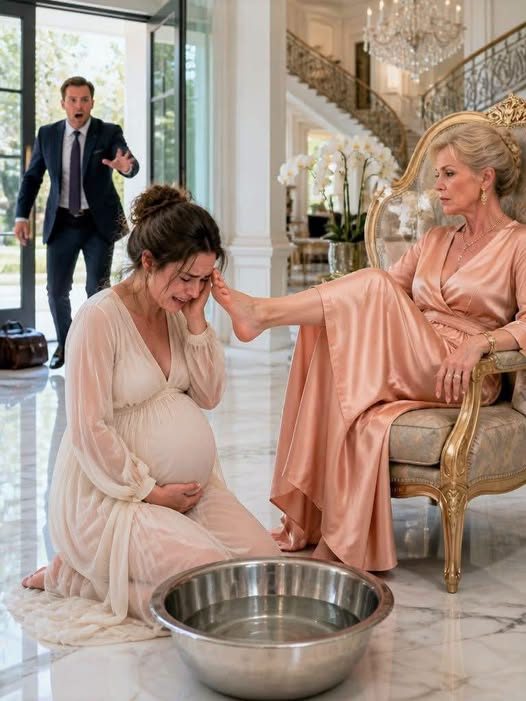
👉 By protecting Theodore’s pride, Vivian allowed his family to believe the mansion—and eventually Vivian herself—belonged to them.