Chapter 12 - The Life Truth Left Behind
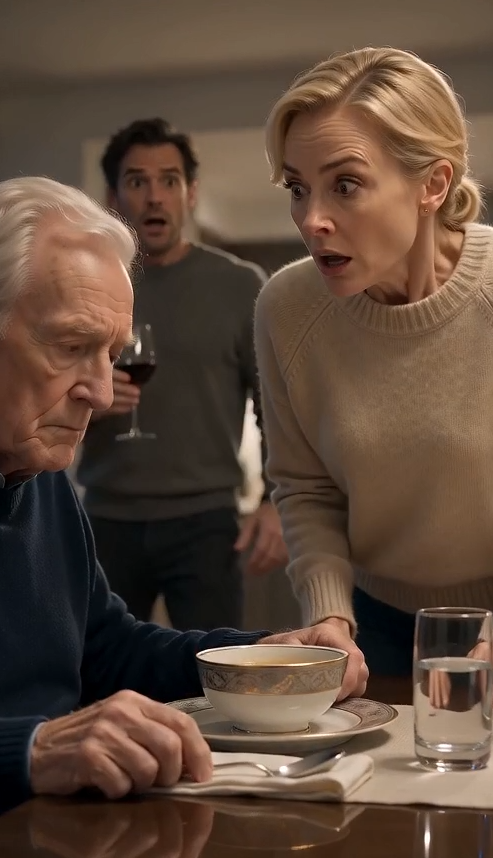
Arthur sold the penthouse within the year.
Not because he couldn’t bear to see the city lights.
Because he couldn’t bear to see the dining table.
He moved into a smaller apartment overlooking the park.
Warmer.
Quieter.
Human-sized.
He brought Eleanor’s writing desk, her books, and one framed photograph of the two of them laughing at some long-forgotten party where neither of them looked rich enough to be dangerous.
He kept fresh white flowers by the window every Monday.
Not roses.
Never roses.
The company survived.
Arthur returned to Bennett Property Group long enough to clean it out, rebuild the oversight system, and put real protections in place for elderly clients, family-controlled trusts, and medical proxy abuse.
Then he stepped back for real.
Not because anyone forced him.
Because he chose peace before power this time.
He also funded a nonprofit in Eleanor’s name — The Eleanor Bennett Center for Elder Protection.
It helped seniors whose relatives tried to isolate them, medicate them, manipulate documents, or seize financial control under the mask of “concern.”
At the opening event, Arthur stood at the podium and said only one sentence that made the whole room go quiet.
“My wife tried to warn me, and my daughter taught me what happens when love refuses to look at the truth.”
People remembered that line for years.
Claire wrote from prison.
At first, Arthur let the letters sit unopened for days.
Then weeks.
Eventually, he opened them.
The first one began with:
Dad, this letter contains no excuses.
So he read it.
Claire wrote about guilt.
About Eleanor.
About how prison stripped her of every elegant lie she had worn around herself.
She did not ask to be forgiven.
She asked only if he would remember one good thing about her before all of this.
Arthur wrote back after a long time.
You were five. You put every spoon in the house into your backpack because you said the dishwasher was “too loud for them.”
It was the first honest memory he could give her.
She wrote back again.
And slowly, painfully, a different kind of relationship began.
Not healed.
Not restored.
But truthful.
Arthur never visited often.
When he did, he did not call what he felt forgiveness.
He called it refusing to let the last true thing between them be hatred.
Some wounds do not close.
They become boundaries.
They become warnings.
They become a different kind of love.
Years later, on a quiet spring morning, Arthur sat by the window with tea in his hand and Eleanor’s letter open beside him.
Sunlight touched the wood of her writing desk.
Outside, children ran through the park.
Inside, there was no fear.
No poison.
No performance.
Only grief that had changed shape and truth that had finally been allowed to live in the room.
He touched Eleanor’s handwriting once and whispered, “I finished it.”
Then he looked at the flowers, at the city, at the life he still had, and understood something he had earned at terrible cost.
Love without truth destroys.
May you like


But truth, even when it breaks a family, can still save a soul.
What would you do if your own child betrayed you for money — would you still seek justice, or would love make you stay silent?