Chapter 14 - THE EMPTY HOUSE
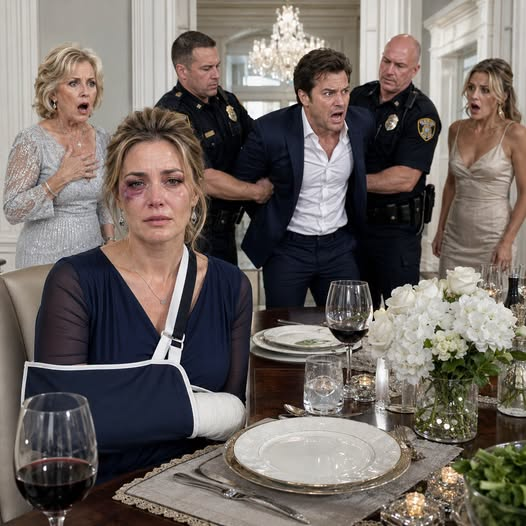
The mansion was silent when Claire returned.
No Judith arranging flowers as though hosting court.
No Vanessa walking through rooms without knocking.
No Daniel’s shoes beside the staircase.
The dining table remained under an evidence cover.
Claire stopped in the hallway where her arm had broken.
The banister section had been removed for forensic testing.
A temporary rail stood in its place.
Her body remembered the impact.
Her shoulder tightened.
Elena waited several feet away.
“We can leave.”
Claire shook her head.
“I spent years leaving rooms so they could remain comfortable.”
She walked upstairs slowly.
In the bedroom, police had removed the forced-signature documents.
The lamp remained broken.
Claire did not sleep there.
She stayed in a small hotel that night.
The next morning, she returned with architects and social-service advisers.
The mansion had twenty-one bedrooms.
A large kitchen.
A library.
Accessible gardens.
Claire created the Bennett House for Financial and Domestic Recovery.
The building would provide temporary housing for survivors whose partners used businesses, property, debt, or family pressure to trap them.
The dining room became a legal evidence center.
The exact table remained.
Not as a shrine to humiliation.
As a workspace where attorneys helped clients review deeds, loan papers, and forged transfers.
The chair Claire occupied was removed.
She did not want anyone sitting inside her pain for symbolism.
The room received brighter lighting and doors that opened toward the garden.
Judith’s suite became transitional housing.
Vanessa’s rooms became classrooms on credit repair and document security.
Daniel’s study became a forensic-accounting lab.
The broken banister was replaced completely.
Claire refused to preserve damage merely because it had become evidence.
One small section was placed in the courthouse archive.
The house was allowed to heal too.
Some Mercer relatives protested the conversion.
They claimed generations of family memories were being erased.
Elena reminded them they had no ownership rights.
Claire offered personal photographs and heirlooms after legal review.
Most relatives wanted furniture, not memories.
They had believed heritage meant access to valuable rooms.
When the first resident arrived, she carried one suitcase and a folder of mortgage notices.
Her husband had opened loans against a home inherited from her mother.
She looked around the mansion.
“Was this really your house?”
“Yes.”
“And they told you it belonged to them?”
“For years.”
The woman whispered:
“How did you make them stop?”
Claire answered:
“I stopped arguing about what the deed already proved and started protecting myself from what they were willing to do about it.”
The foundation opened officially one year after the family dinner.
Yet Claire still avoided eating at the long table.
Food remained connected to laughter, pain, and an untouched plate.
Her therapist suggested beginning with something small.
Claire invited Elena and three employees to breakfast in the garden.
No chandelier.
No formal seating.
No one watching whether she could cut her food.
Her right hand remained weak.
Elena quietly offered a pre-cut piece of fruit.
May you like


Claire accepted without shame.
👉 Claire had reclaimed the mansion for others—but reclaiming ordinary acts like eating, sleeping, and asking for help required a different kind of courage.