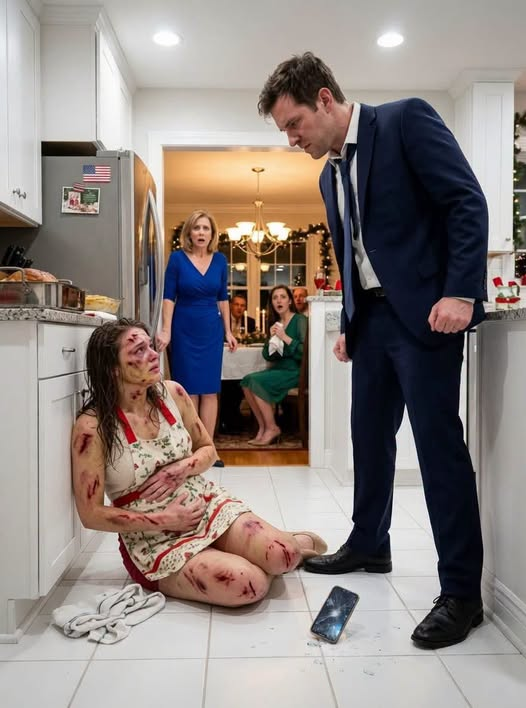
Chapter 12 - CLAIRE FACED THE PEOPLE WHO RAISED HER

The trial began nearly a year after the crash.
Claire entered the courtroom using a cane.
Her arm had healed, but nerve damage still weakened her grip.
Richard sat beside his attorneys.
Marianne sat at a separate table.
They no longer looked like Claire’s parents.
Yet her body still reacted when Richard turned his head.
She remembered waiting for his approval after school performances.
She remembered Marianne sitting beside her during a childhood fever.
Criminal evidence did not erase every gentle moment.
It made those moments harder to understand.
The prosecution began with Victoria’s delivery.
Ruth described the missing infant.
Hospital records showed the false death certificate.
The attorney admitted creating the protective-custody order.
Bank experts traced trust withdrawals.
Photographs proved the Carter family’s lifestyle had been funded through Claire’s identity.
Then the evidence moved to Claire’s childhood.
The forged marrow-consent forms.
The diverted education funds.
The false birth certificate.
The intercepted mail.
The planned guardianship.
The locked care office.
The medications.
Finally, the emergency-room recording played.
Marianne’s voice:
She’s expendable.
Richard:
Take whatever he needs from her.
Claire kept her eyes open.
Marianne looked down.
Richard did not.
Daniel testified next.
He admitted knowing pieces of the truth.
He admitted taking Claire’s phone.
He admitted grabbing the wheel.
His attorney asked why he cooperated.
“Because my parents told me Claire existed to keep our family alive.”
He looked toward Claire.
“I believed them until I almost killed her.”
Claire felt no immediate forgiveness.
But for the first time, Daniel named what he had done without calling illness an excuse.
Victoria testified about waking to an empty bassinet.
Richard’s attorney questioned why she had not found Claire sooner.
Victoria answered:
“I searched under the name Claire Whitmore. He raised her under another name, with forged records, while using my own money to remain hidden.”
The attorney suggested Victoria now wanted control over an adult daughter.
Victoria looked toward Claire.
“She has refused my advice many times this year. That is her right.”
Claire took the stand last.
The prosecutor asked who raised her.
“Richard and Marianne Carter.”
“Do you consider them your parents?”
Claire paused.
“They performed parts of parenting. They also kidnapped me, stole my identity, used my body, and taught me my value depended on Daniel.”
The answer contained no simple label.
The defense asked whether the Carters had fed, educated, and housed her.
“Yes.”
“Did they ever say they loved you?”
“Yes.”
“Then they were not merely criminals.”
Claire looked at Richard.
“Love does not legalize ownership.”
Richard’s attorney suggested Claire’s new wealth influenced her accusations.
Claire lifted the locket.
“I began asking questions before I knew what the trust was worth.”
Marianne’s attorney portrayed her as a frightened young records clerk controlled by Richard.
The prosecution showed Marianne altering documents, administering medication, creating forged donor forms, and planning Claire’s death.
She had not been a passive accomplice.
Richard chose to testify.
He said Victoria’s family treated him as inferior.
He claimed taking Claire was the only way to remain her father.
The prosecutor asked:
“Why tell Victoria the baby died?”
“She would have taken Claire from me.”
“Why change the child’s name?”
“To protect her.”
“Why steal from her trust?”
“To raise her.”
“Why call her expendable?”
Richard finally looked toward Claire.
“She was always stronger.”
Claire’s face remained still.
Strength had once again become his excuse for giving her less humanity.
May you like

The case went to the jury after seven weeks.
👉 Richard claimed Claire’s strength justified every sacrifice—but the verdict would decide whether raising a stolen child could ever erase the crime of stealing her.