Chapter 18 - THE HOME SHE CHOSE TO LEAVE OPEN
On Eleanor’s eightieth birthday, the Whitmore Center gathered inside the mansion ballroom.
Former residents sat beside nurses, attorneys, bank investigators, caregivers, and family members who had completed accountability programs.
Daniel stood near the back.
Elena sat in the front row.
Eleanor entered using a silver cane.
She wore the blue cardigan visible in the earliest hidden-camera footage.
Not because she wanted to recreate the abuse.
Because Vanessa had once treated the cardigan as proof of fragility.
Eleanor now wore it while announcing the future of the estate.
The mansion would never pass into private family ownership again.
Her amended trust placed it permanently under the independent nonprofit center.
Daniel agreed.
He would inherit other assets and company shares, but not the house.
Some relatives objected.
They said the Whitmore estate should remain in the family.
Eleanor answered:
“It is remaining with the work my family should have done.”
The commercial properties would continue funding elder-autonomy services.
A protected reserve would support emergency relocation, medical review, and legal representation.
No director could sell the mansion without court approval and a supermajority vote from resident representatives.
Daniel signed the consent documents beside Eleanor.
He read every page.
“Any hidden clauses?” he asked.
Eleanor looked toward the blue sewing box displayed nearby.
“Only thread.”
They both laughed.
Then Elena spoke.
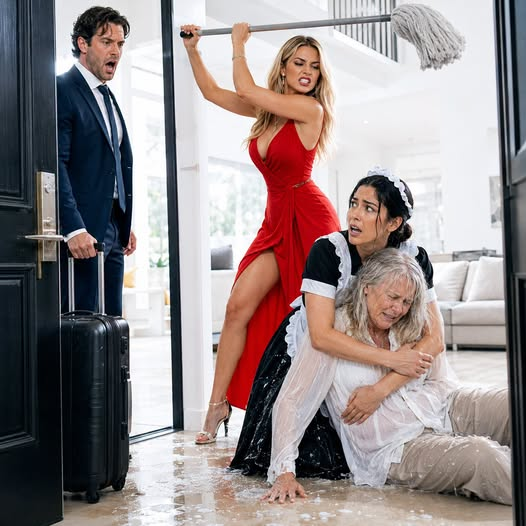
She described the day Daniel returned.
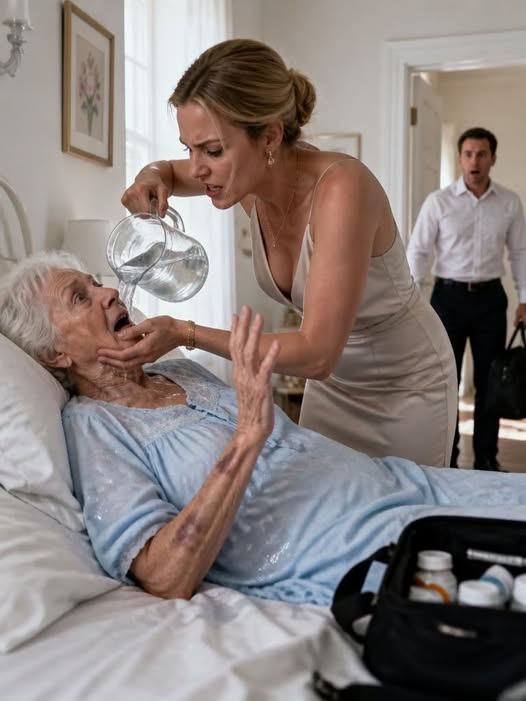
The water across the floor.
The raised mop.
Eleanor holding onto her.
The suitcase falling.
“I thought the camera would prove what happened,” Elena said. “I didn’t know whether proof would arrive in time.”
She looked toward Daniel.
“It did because someone finally came home and looked.”
Daniel did not accept the sentence as praise alone.
He answered:
“And months passed because I did not look sooner.”
The room remained quiet.
Both truths belonged in the story.
After the ceremony, residents opened the mansion doors to the garden.
No one required permission from a family gatekeeper.
An elderly woman entered holding her own house deed.
Her nephew had hidden it for two years.
A volunteer attorney invited her into the library.
Another resident called her sister using a private phone.
A man met with an independent doctor who spoke to him without his children present.
The estate no longer measured loyalty through silence.
Years passed.
Eleanor continued living in a private apartment within the center, not as its ruler but as one resident with the same rights as everyone else.
She attended board meetings.
Lost votes sometimes.
Complained about the coffee.
Taught sewing on Wednesday afternoons.
The blue box remained in the legal archive.
Its false bottom stayed open.
Visitors often expected dramatic jewels.
Instead, they found notes, copies, a memory card, and an ordinary bottle of pills.
The objects demonstrated how abuse often looked before the final attack.
A changed prescription.
A missing phone.
A signature page.
A locked door.
A witness called dishonest.
Daniel visited every Sunday unless Eleanor canceled.
Sometimes they discussed the center.
Sometimes they watched baseball.
Their relationship never returned to what it was before Vanessa.
It became more honest than before.
When Eleanor died peacefully many years later, she was not alone or locked away.
Daniel sat beside her.
Elena held her other hand.
The mansion doors remained open downstairs.
Her memorial contained no praise for wealth.
The speaker read the sentence she had left inside the sewing box:
A house belongs to no one who must frighten another person to keep it.
The Whitmore Center continued after her death.
No Daniel.
No Vanessa.
No future heir could close it.
The hidden camera that once blinked above the foyer remained inside its glass case.
Beside it, Robert’s brass thimble caught the light.
Vanessa had believed Daniel’s absence made Eleanor invisible.
She believed age erased authority.
She believed Elena’s job title erased credibility.
She believed a locked bedroom could become the whole truth.
She was wrong.
Eleanor had written.
Elena had preserved.
The cameras had recorded.
Daniel had finally listened.
May you like


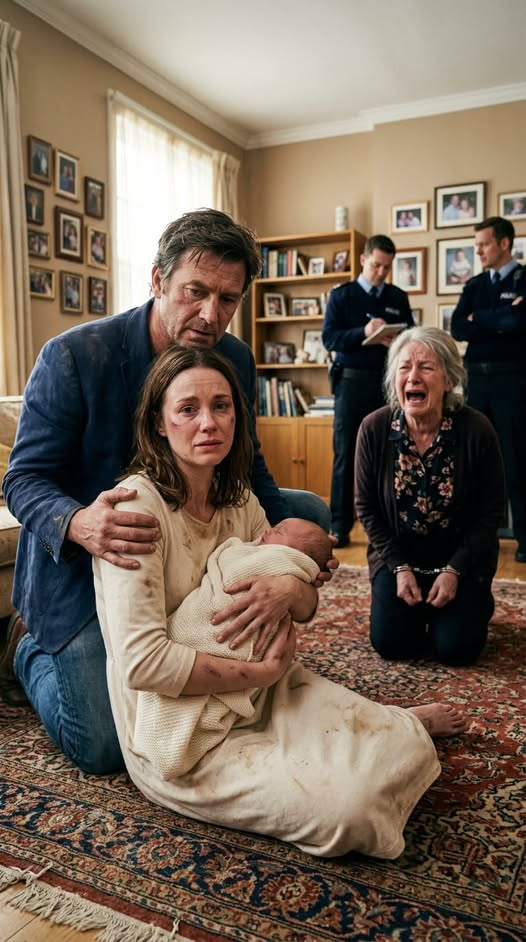
And the home Vanessa tried to steal became a place where no frightened person was ever again told that family ownership mattered more than their voice.
Would you have forgiven Daniel for believing Vanessa’s calm lies so long, or would arriving in time still have been too late to repair what his silence allowed?