Chapter 3 - The Three-Day Lie
Helen went to the hospital for chest pain and shortness of breath.
Not to die.
At least, not according to the first doctor.
She had pneumonia, dehydration, and stress on her heart. Serious, yes. Dangerous, yes. But treatable if managed carefully.
The cardiologist said, “We need to monitor her closely over the next seventy-two hours.”
Rachel heard seventy-two hours and turned it into a weapon.
By evening, she was whispering in the hallway.
“Mark, your mother may only have three days.”
Mark looked shattered.
Or maybe frightened.
Helen could not tell anymore.
The next morning, Rachel began making calls.
Private notary.
Mobile document service.
Financial planner.
She told the hospital staff she was “helping Helen organize final wishes.”
She told Mark she was “protecting him from probate.”
She told herself, perhaps, that greed sounded better when dressed as efficiency.
The papers arrived before lunch.
Helen noticed the title.
Amendment to Whitmore Family Trust.
Then another page.
Immediate Trustee Transfer.
Then another.
Authorization of Asset Consolidation.
Helen’s heart began pounding.
Her current estate plan was simple.
Mark would receive a generous inheritance.
Several charities would receive gifts.
A medical scholarship in Robert’s name would be funded.
Sarah Jenkins would serve as trust protector until all matters were settled.
No one could make changes if Helen was hospitalized, under medication, or under pressure without Sarah’s direct review and a physician’s capacity confirmation.
Robert had insisted on that clause.
Mark had never read it.
Rachel clearly had.
Because the new documents removed Sarah entirely.
They made Mark immediate trustee.
They gave Rachel financial management authority if Mark was “unavailable.”
They transferred Helen’s Brentwood house into a family holding company Mark controlled.
They redirected charitable gifts into “family reserves.”
Helen looked at Rachel.
“This is not protection.”
Rachel’s face tightened.
“It prevents strangers from taking what belongs to your son.”
Helen’s voice was weak.
“Sarah is not a stranger.”
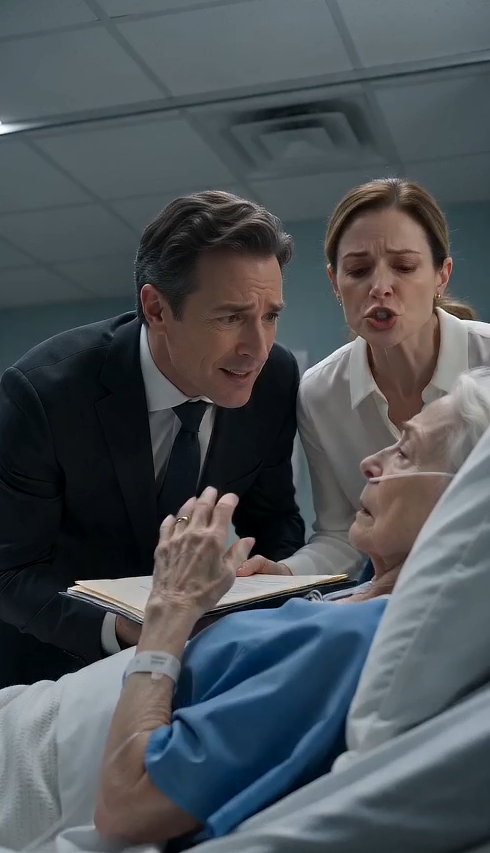
Rachel leaned closer.
“She is a lawyer. Lawyers get paid when families fight.”
Helen looked at Mark.
“Did you read this?”
Mark avoided her eyes.
“Rachel explained it.”
Helen felt something inside her break.
Not loudly.
Not suddenly.
Slowly.
Like thread pulling loose after years of strain.
“Then you didn’t read it.”
Mark’s face flushed.
“Mom, please. Don’t make this harder.”
Helen stared at him.
“I am in a hospital bed.”
Rachel placed the pen in Helen’s hand.
“That’s why we need to do it now.”
Helen closed her fingers around the pen.
For one moment, Rachel smiled.
She thought weakness had won.
Then Helen dropped the pen onto the blanket.
“Not yet.”
Rachel’s smile disappeared.
Mark whispered, “Mom…”
Helen turned toward the nightstand.
The drawer was open.
The notebook waited.
And for the first time since arriving at the hospital, Helen understood Robert’s warning had not been about strangers.
May you like


Sometimes the most dangerous hands reaching for your estate are the ones you once held as a child.
👉 Rachel used the doctor’s “seventy-two hours” as a death sentence, but Helen knew the documents were not about care—they were about control.