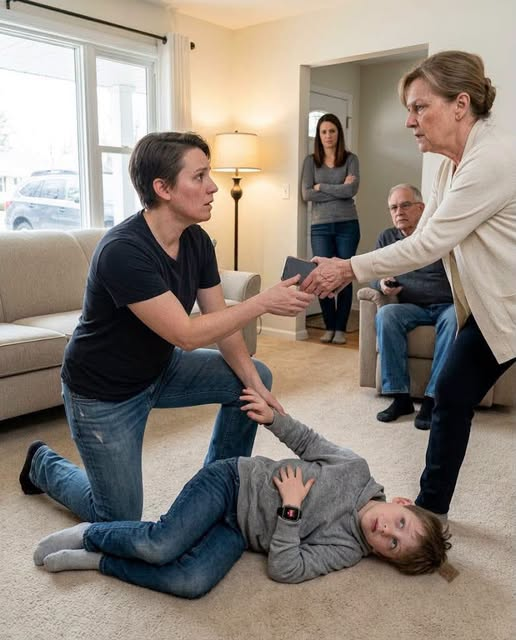
Chapter 2 - The Son Who Always Needed Saving

Mark had been Helen’s only child.
That was how he learned to make love feel like obligation.
When he was young, Helen forgave everything.
Missed classes.
Broken windows.
Unpaid parking tickets.
A failed college semester he blamed on stress.
A business loan he promised to repay and never did.
Helen’s husband, Robert, had been stricter.
“He has to learn consequences,” Robert used to say.
Helen would answer, “He’s our son.”
Robert loved Mark.
But he saw him clearly.
Helen loved Mark too much to admit she saw him clearly as well.
After Robert died, Mark changed.
At first, he came every Sunday.
Brought groceries.
Fixed lightbulbs.
Called her “Mommy” the way he had when he wanted something as a boy.
Then Rachel entered his life.
Rachel was polished, charming, and always calculating who owned what before deciding how warmly to smile.
She called Helen “a blessing” in public.
In private, she asked questions.
Who handled the trust?
Was the Brentwood house paid off?
Did Helen still own shares in Robert’s old logistics company?
Had she updated her will after Robert died?
Helen noticed.
Of course she noticed.
Old age had slowed her steps, not her mind.
Rachel spoke to her like she was fragile.
Mark spoke to her like she was a responsibility.
Together, they began calling her estate “family planning.”
Helen disliked the phrase.
Family planning should have meant love, protection, clarity.
In Mark and Rachel’s mouths, it sounded like inventory.
One afternoon, Rachel placed a brochure for “legacy simplification” on Helen’s kitchen table.
“It’s just smart,” Rachel said. “At your age, everything should be streamlined.”
Helen looked at her.
“My age does not require me to sign away judgment.”
Rachel smiled too brightly.
“Of course not.”
Mark sat beside Rachel, silent.
Helen looked at him.
“Do you agree with this?”
Mark rubbed his forehead.
“Mom, we just don’t want things complicated when the time comes.”
When the time comes.
They had started speaking about her death as if it were a calendar appointment.
That night, Helen called Sarah Jenkins.
Sarah was not family.
That was why Helen trusted her.
She had been Robert’s junior attorney thirty years earlier, then became one of the best estate lawyers in Los Angeles.
Robert used to say, “If anyone ever tries to turn grief into paperwork, call Sarah.”
Helen had laughed then.
She did not laugh now.
Sarah listened as Helen described Rachel’s questions, Mark’s silence, the pressure, the brochures, the strange urgency.
When Helen finished, Sarah said, “Helen, I want you to write my number in a notebook. Not just your phone.”
“Why?”
“Because people who want control often start with phones.”
Helen’s fingers tightened around the receiver.
Sarah continued.
“And if anyone pressures you when you are sick, medicated, frightened, or isolated, you say two words.”
“What words?”
“Call Sarah.”
Helen wrote them down in blue ink.
She hoped she would never need them.
But hope is not a plan.
May you like



And Robert had taught her better than that.
👉 Helen thought preparing the notebook was only a precaution, but Rachel and Mark were already waiting for the first hospital crisis.