Chapter 10 - The House That Was Not a Room
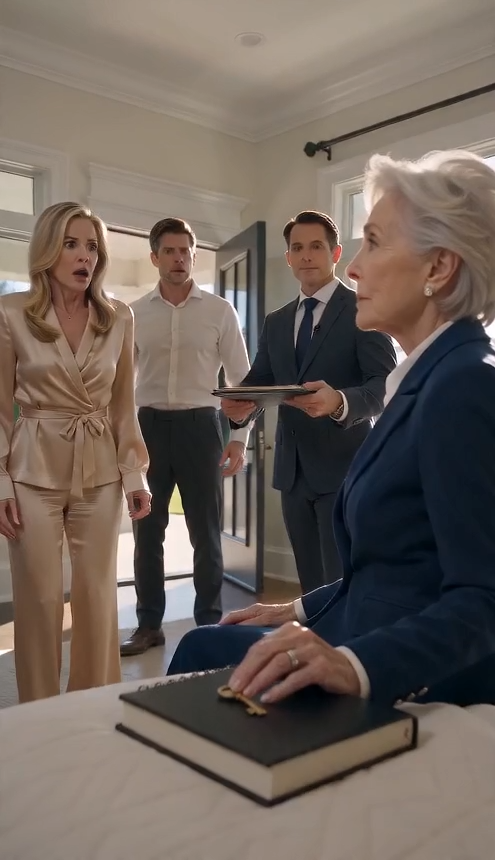
The lake house smelled like cedar, dust, and sunlight.
Evelyn stood in the foyer for a long time before crossing the threshold fully.
No one rushed her.
No one told her where to put her coat.
No one said the tea kettle ruined the look of the counter.
The silence belonged to her.
That was strange at first.
Then wonderful.
Robert’s old books arrived from storage the next day.
His armchair came after that.
The movers placed it near the wide window overlooking the lake.
Evelyn touched the worn leather armrest.
“Perfect.”
In the kitchen, she unpacked her blue tea kettle and put it directly on the stove.
Then she laughed out loud.
A small rebellion.
A holy one.
The first room she decorated was not the primary bedroom.
Not the living room.
Not the porch.
It was the guest room.
She painted it soft green, added white curtains, and placed a small brass plaque on the door.
FOR WHOEVER NEEDS A SAFE PLACE.
Martin saw it and raised an eyebrow.
“Planning to run a shelter?”
Evelyn smiled.
“Maybe just a beginning.”
It began sooner than expected.
A woman from her church, Marisol, needed somewhere to stay after surgery because her son lived out of state.
Then an old neighbor, Joan, stayed for two weeks after selling her home and waiting for her apartment to be ready.
Then Martin called about an elder client whose daughter had been pressuring him to sign away accounts.
Evelyn listened.
Then said, “He can have the green room.”
Word spread quietly.
Not a business.
Not charity dressed up for applause.
A refuge.
Evelyn created a small fund with part of Robert’s savings and called it The Cornerless Home Fund.
Because no one should trade a home for a corner.
She worked with Martin to help older widows and widowers review documents before signing anything with family.
She hosted tea every Wednesday.
Sometimes people came for legal advice.
Sometimes they came because they needed one person to say, “You are not selfish for wanting safety.”
Evelyn said it often.
And every time, she said it to herself too.
Nathan did not come.
He could not, legally.
But after six months, he sent a letter through Martin.
Evelyn left it unopened for three days.
Then she read it on the porch.
It began badly.
I know Brooke pushed things too far.
She almost stopped reading.
Then, halfway down, the words changed.
I stood there when she threw the suitcase on your bed.
I let her say things I knew were cruel because I wanted the money and didn’t want to be the bad guy.
I’m sorry.
Not enough.
But honest.
Evelyn folded the letter.
She did not reply that day.
Or that week.
The court case resolved before winter.
Nathan and Brooke lost the lake house dream, the bridge loan credibility, and most of their reputation.
Brooke’s attempt to challenge Evelyn’s capacity failed so thoroughly that her own attorney withdrew from further threats.
Nathan accepted a settlement acknowledging coercive conduct and agreed to financial penalties tied to the lender misrepresentation.
Their marriage cracked under blame.
That was their story.
Not Evelyn’s.
Her story was the lake at sunrise.
The blue kettle.
The green room.
Robert’s chair.
The black notebook now used not only for documenting harm, but for writing names of people she had helped.
One morning, Evelyn placed the brass key on the notebook and realized she no longer saw it as proof she had escaped.
It was proof she had chosen.
May you like


There is a difference.
👉 Evelyn built a safe life without Nathan, but one final meeting with her son would decide whether the door between them stayed closed forever.