Chapter 12 - The Brunch Eleanor Did Not Cancel
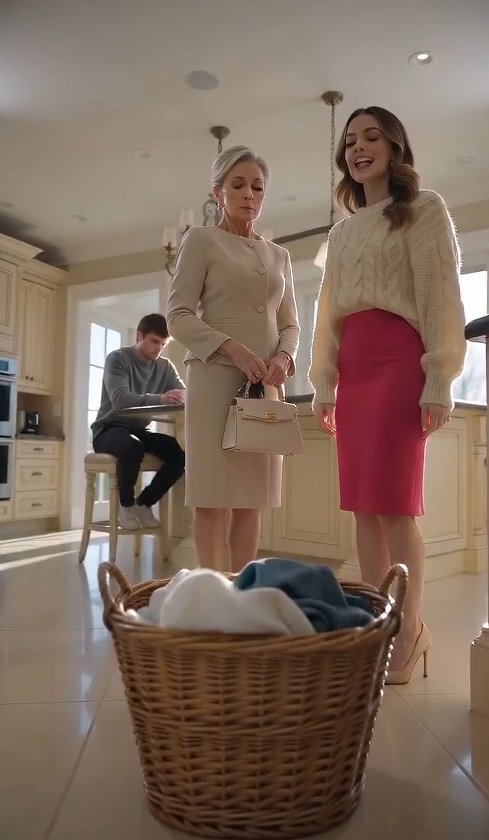
One year later, Eleanor hosted brunch in the cream-colored kitchen.
The same kitchen.
But not the same house.
The laundry basket was long gone.
The household account had been repaired.
The primary suite was hers again.
Arthur’s watch sat in the study where it belonged.
The kitchen island, once the place Brooke tried to shame her, was covered in lemon scones, fruit, coffee, and white flowers.
Arthur’s old partners came.
So did Mr. Whitaker.
So did Nina, who brought too many pastries.
Brandon arrived last, carrying a casserole and looking nervous in a navy sweater.
He paused at the threshold.
Eleanor noticed.
“You can come in, Brandon.”
He smiled faintly.
“I’m waiting to be invited.”
That mattered.
Eleanor nodded.
“Then come in.”
He did.
Their relationship was not magically fixed.
Some days, Eleanor still remembered his silence and felt the hurt fresh again.
Some days, Brandon still apologized too much, trying to fill a hole that could only be rebuilt slowly.
But he had kept showing up properly.
Not demanding.
Not explaining.
Not rushing forgiveness.
He repaired the porch railing.
Then the garden gate.
Then the old bookshelf Arthur built.
He never used those repairs as payment.
He asked.
He waited.
He accepted no.
That was why he was in the kitchen now.
Not because he was her son.
Because he was learning how to act like one.
After brunch, Eleanor stood at the sink rinsing coffee cups.
Brandon came beside her.
“Mom.”
“Yes?”
“I know Dad’s birthday brunch should have happened last year.”
Eleanor’s hands stilled.
“I know.”
“I’m sorry I let her stop it.”
Eleanor looked out the window at Arthur’s oak tree.
“She didn’t stop it forever.”
Brandon’s eyes filled.
“No.”
Eleanor handed him a towel.
“Dry.”
He laughed softly and obeyed.
Outside, sunlight warmed the porch.
Inside, friends talked and laughed and remembered Arthur with stories Brooke would have called boring because none of them helped her gain anything.
Whitaker raised a coffee cup toward Eleanor.
“To the woman Arthur trusted most.”
Eleanor smiled.
“To Arthur,” she said.
Everyone lifted their cups.
Brandon lifted his too.
His hand trembled slightly.
Eleanor saw it.
Then, after a moment, she touched his wrist.
A small gesture.
Not full forgiveness.
Not erasure.
But hope.
Later that evening, when the house was quiet, Eleanor walked into the kitchen alone.
For a second, she could still see the basket on the floor.
Brooke’s chin raised.
Brandon silent.
Her own keys cutting into her palm.
Then the memory faded.
The floor was clean.
The room was warm.
Her purse sat on the counter beside her keys.
Not as a weapon.
Not as evidence.
Just hers.
Brooke had moved to another city after the divorce proceedings began. She was still repaying what she owed. She still called Eleanor cruel to anyone who would listen.
Eleanor no longer cared.
Cruel people often mistake boundaries for cruelty because they can no longer use kindness as a door.
Eleanor poured herself a cup of tea and sat at the breakfast nook.
Arthur’s photo smiled from the shelf.
She looked at it and whispered, “You were right.”
Then she smiled.
“But I handled it.”
The house was quiet, but no longer lonely.
It was peaceful.
And peace, Eleanor had learned, is not the absence of family.
It is the absence of people who make love feel like servitude.
Brooke had thrown dirty laundry at her feet because she thought a widow had no one left to protect her.
But Eleanor had Arthur’s trust.
Whitaker’s documents.
Her own records.
And, finally, the one protector Brooke never considered.
May you like



Herself.
If someone treated your widowed mother like a servant in her own home, would you call it family tension—or would you make sure they never mistook her kindness for weakness again?