PART 9: Hannah’s Voice
FINAL PART: Hannah’s Voice
The courtroom was smaller than Hannah expected.
No dramatic staircase.
No crowd gasping behind velvet ropes.
Just wood benches, fluorescent lights, a judge with tired eyes, and Patricia Reed sitting at the defense table in a soft gray blazer.
She looked elegant.
Fragile.
Wronged.
Exactly how she wanted to look.
Hannah sat between Evan and Colonel Bennett, Owen asleep in a carrier at their feet.
Her wrists had faded from purple to yellow.
Her body was healing.
But healing was not the same as forgetting.
Patricia’s attorney called it a misunderstanding.
A family crisis.
An overwhelmed grandmother making imperfect decisions under stress.
Then the prosecutor played the audio.
Patricia’s voice filled the courtroom.
“No one is calling anyone until she signs.”
Then Hannah’s weak plea.
“Please, he needs to eat.”
Then Patricia again.
“He needs a mother who can stand up.”
No one moved.
Even Patricia looked at the table.
Not with remorse.
With fury that her own words had survived her.
Courtney testified first.
She cried through most of it, but she did not protect her mother.
She admitted Patricia planned to use the baby monitor clips to make Hannah appear unstable.
She admitted Patricia hid Hannah’s phone.
She admitted Patricia told her the guardianship papers would “solve everything before Evan got soft.”
Then Evan testified.
His voice shook when he said, “I believed my mother because it was easier than questioning her. That is my failure. My wife and son paid for it.”
Hannah looked at him then.
Not forgiven completely.
But seen.
When it was Hannah’s turn, Bennett squeezed her hand once.
“You don’t have to be strong,” he whispered.
Hannah looked at Owen.
Then stood.
Her legs trembled, but she did not sit back down.
She told the court about waking up without her phone.
About reaching for her crying baby.
About being told weakness made her unfit.
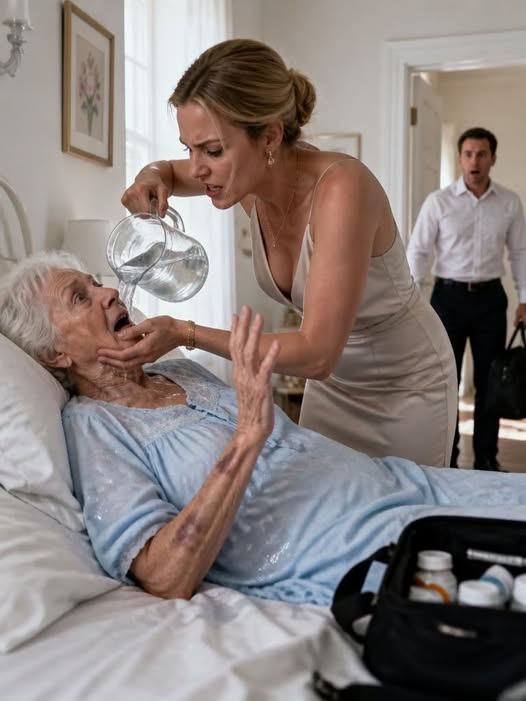
About the moment Patricia covered the blood with a blanket instead of calling a doctor.
She did not exaggerate.
She did not perform pain.
She simply told the truth.
And the truth was enough.
When she finished, the judge was quiet for a long moment.
Then she looked at Patricia.
“A newborn’s cry is not an inconvenience. A postpartum mother’s weakness is not an opportunity. This court sees a deliberate pattern of coercion, neglect, intimidation, and endangerment.”
Patricia’s face went pale.
She was convicted on multiple charges connected to assault, child endangerment, unlawful restraint, and attempted coercion. The financial documents opened a separate investigation into fraud and attempted exploitation.
She received jail time, probation after release, mandatory counseling, and a long-term protective order barring contact with Hannah and Owen.
Courtney avoided jail by cooperating fully, but the judge ordered her to complete counseling and barred unsupervised contact with Owen until Hannah chose otherwise.
Hannah did not celebrate.
Justice did not feel like fireworks.
It felt like breathing.
Months passed.
Hannah moved back into the townhouse with the green nursery curtains.
Bennett stayed nearby for two weeks, pretending to “fix a few things” while repairing a perfectly functional cabinet, a squeaky door, and a crib mobile that did not need his supervision.
Every morning, he made coffee.
Every afternoon, he walked Owen around the block in a stroller, wearing civilian clothes but still somehow looking like he commanded the sidewalk.
Evan took leave.
He went to counseling.
He cut contact with Patricia before Hannah asked him to.
He sold the truck Patricia had helped him buy and used the money to install a security system and hire postpartum support.
Not as a grand gesture.
As proof that love had to become action.
Hannah did not rush back into trusting him.
Some nights, when Owen cried too long, she froze.
Evan learned not to say, “He’s fine.”
He learned to say, “I’ve got him. You’re safe. Sleep if you can.”
Sometimes she let him.
Sometimes she couldn’t.
He accepted both.
One spring afternoon, six months after the bedroom, Hannah stood in the backyard holding Owen on her hip. He was round-cheeked now, healthy and curious, grabbing at the collar of Bennett’s shirt.
Bennett sat in a lawn chair, letting the baby pull at his sleeve like it was a military decoration.
“You’re outranked,” Hannah said.
Bennett looked down at Owen’s tiny fist.
“I accept the command.”
Hannah laughed.
A real laugh.
Evan stood on the porch, watching them with quiet gratitude.
He did not interrupt the moment.
He had learned that love was not ownership.
It was presence.
Patience.
Protection without control.
Later, Hannah took Owen upstairs to the nursery. The room glowed with soft afternoon light. The same wicker bassinet sat near the window now, not as evidence of horror, but as proof that objects could survive bad memories and become gentle again.
Owen stirred in her arms.
Hungry.
Fussy.
Alive.
Hannah sat in the rocking chair her father had built and fed her son without fear.
No one took him.
No one corrected her.
No one called her weak.
Downstairs, Bennett paused at the doorway before leaving.
Hannah looked up.
“You okay, Dad?”
His eyes moved to Owen, then back to her.
“I am now.”
She smiled.
For years, Hannah had thought strength meant needing no one.
Now she knew better.
Strength was reaching out before the darkness won.
Strength was telling the truth with a shaking voice.
Strength was letting love stand guard at the door while you learned how to breathe again.
And on the wall above Owen’s crib, Hannah hung one small framed photo.
Not of the courtroom.
Not of the hospital.
Not of Patricia in handcuffs.
It was a picture Evan had taken quietly one morning.
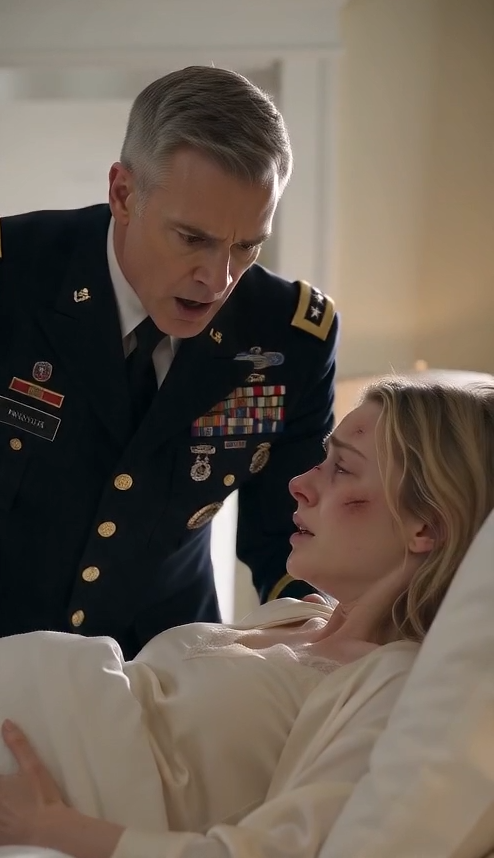
Colonel Bennett asleep in the rocking chair, Owen curled against his chest, one tiny hand resting over the medals on his old dress uniform jacket.
Hannah called it what it was.
The day her son learned what protection looked like.
May you like

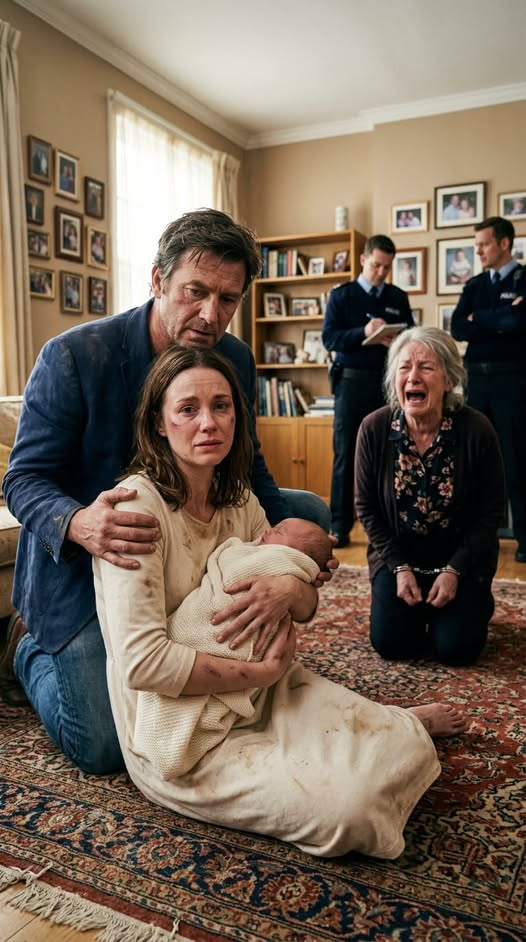
And the day she finally believed she deserved it too.
What would you have done if you walked into that bedroom and found your daughter and newborn grandson crying for help?