PART 4: The Convoy No One Spoke About
PART 4: The Convoy No One Spoke About
Twenty-two years earlier, Jack Mercer was not supposed to be a hero.
He was supposed to drive.
That was it.
He was a civilian convoy driver under a classified logistics contract. Not an officer. Not special operations. Not someone whose name went into speeches.
He hauled fuel, medicine, radio equipment, and emergency supplies through the worst roads in the world.
The soldiers called him “Merc.”
He called himself lucky when he made it back with all eighteen wheels and no holes through the windshield.
Captain Daniel Holloway was different from most officers Jack met.
He learned drivers’ names.
He drank bad coffee with mechanics.
He checked on the youngest soldiers when mortar fire got too close.
He wore a braided leather band around his wrist. Dark brown. Cracked from heat and sweat.
“My brother made it,” Holloway once told Jack. “Said if I got scared, I should look at it and remember I had somewhere to come home to.”
Jack had laughed.
“Does it work?”
Holloway smiled.
“Some days.”
Then came the night outside Al-Rahim Pass.
The convoy was supposed to be routine.
It was not.
The lead vehicle hit the blast first.
Then the ridge lit up.
Gunfire from both sides.
Smoke everywhere.
Radios screaming over one another.
Jack’s truck took shrapnel through the passenger door. His windshield spiderwebbed. His ears rang so badly he could barely hear his own breathing.
The military escort ordered everyone to hold position.
Then a second blast rolled one of the armored vehicles into a ditch.
Captain Holloway’s vehicle.
Jack saw flames.
He also saw men inside moving.
Alive.
The radio shouted for evacuation support.
Too far.
Too slow.
No clear route.
Jack did not wait for permission.
He drove his damaged truck straight into the kill zone.
Later, people would ask why.
Jack never had a good answer.
Because they were alive.
Because nobody else could reach them.
Because sometimes the body moves before fear votes.
He slammed the truck between the burning vehicle and the ridge, using the trailer as a shield.
Bullets punched through metal.
Glass fell across the dash.
Jack climbed out, dragged one soldier free, then another.
Captain Holloway was pinned.
His leg was crushed. His face was covered in blood. Still, he grabbed Jack’s shirt.
“There’s a kid in the back,” Holloway gasped.
Jack went back.
By the time he pulled the last soldier out, his arms were burned, his shoulder was torn open, and his truck was dying.
Holloway knew he was not going to make it.
He took the leather band off his own wrist and tied it around Jack’s.
“Tell Nate,” he whispered.
Jack leaned closer.
“Tell him what?”
Holloway’s eyes burned in the firelight.
“Tell him I wasn’t alone.”
Then the medevac team arrived too late for Holloway, but not for the others.
Seven men lived because Jack drove into the fire.
But the report that followed did not say that.
The contractor buried the civilian driver’s name.
A young military logistics officer filed the first false version.
Colonel Grayson Pike.
Back then, Pike was a major trying to protect his career. He had approved a route change against warnings. If the truth came out, his mistake would destroy him.
So the file said the convoy was delayed by civilian error.
It said Jack disobeyed movement protocol.
It said Holloway’s death was unavoidable.
Jack was offered money to stay quiet.
He refused.
Then he was warned that speaking publicly would violate classified agreements and endanger the families of men still serving.
So Jack did what he had done his whole life.
He carried the load.
Quietly.
He went home.
Raised Ava.
Drove trucks.
May you like
And wore Holloway’s band because a dying man had asked him to remember.
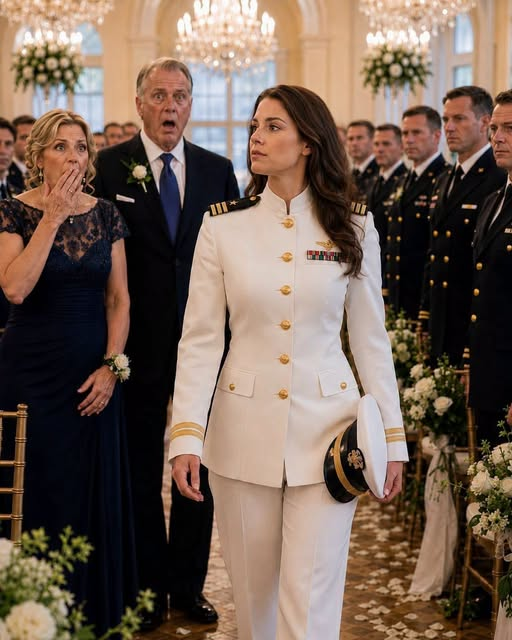
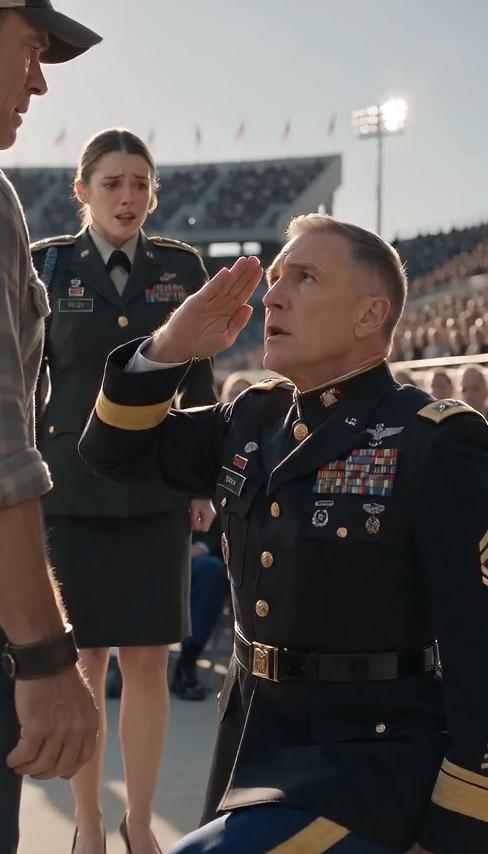
👉 Jack accepted silence to protect others, but Colonel Pike used that silence to build the career that now stood on the same stage as his daughter.